The Oliver McGowan Mandatory Training on Learning Disability and Autism aims to save lives by ensuring the health and social care workforce have the right skills and knowledge to provide safe, compassionate and informed care to autistic people and people with a learning disability.
The training is named after Oliver McGowan, whose death shone a light on the need for health and social care staff to have better training.
The introductory e-learning can be accessed here by anyone.
You will need to make an account.
TEOM is accredited to deliver the Oliver McGowan Tier 1 interactive webinars.
This training is applicable for everyone who works in health or social care, or any organisation that works with the public.
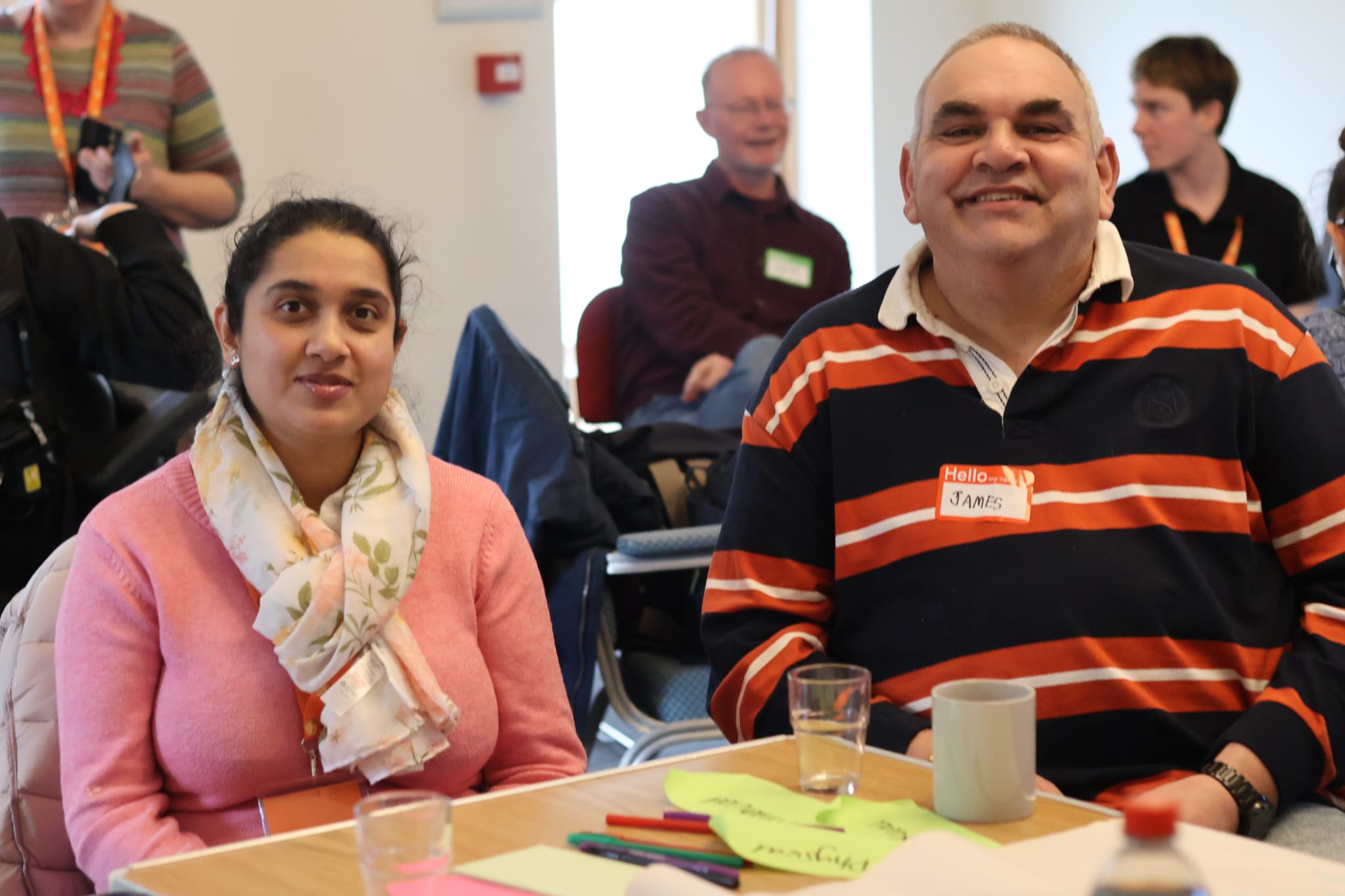
Participants will hear directly from TEOM’s co-trainers about how they experience their lives, what helps them and how they like to be communicated with, with a chance to ask questions.
TEOM is accredited to deliver the Oliver McGowan Tier 2 interactive full day training for healthcare professionals and social care staff. Professionals from other helping industries may find it useful too.
Participants will hear from our co-trainer with lived experience of Learning Disability in the morning, and our Autistic co-trainer in the afternoon. This can be split across 2 different days where helpful. This training is recommended for up to 30 people at a time.
TEOM can be booked to come and deliver at your organisation, and we sometimes offer open trainings that people can book onto. When we do, we list them on our Humantix page here.
The training is interactive, engaging and emotive. It calls attention to the different barriers to accessing fair, ethical and accessible health and social care support. Our co-trainers provide valuable insight into what it’s like to live life with a learning disability and/or autism and help teach tangible skills to professionals to make their practice more inclusive.
There are lots of health and social care staff that still need to access the Oliver McGowan Mandatory Training on Learning Disability and Autism. Some larger organisations prefer to deliver the training in house, where they are set up to offer employment opportunities to the people that use their service.
TEOM is accredited to train new facilitators and co-trainers of the Oliver McGowan Mandatory Training on Learning Disability and Autism. As an experienced provider of the training, we love to share our knowledge and expertise.
The TEOM Train the Trainer offer goes above and beyond national minimum standards so that facilitators and co-trainers come away feeling confident and prepared. As well as thinking about the logistics, we help facilitators to find opportunities for their co-trainers to shine.
The training is usually 2 full days for each group, and we generally recommend 2 shorter follow up sessions on top of this. TEOM can also sometimes offer shadowing opportunities to help facilitators and co-trainers gain confidence.
If you feel passionate about this training and you want somebody to give you the skills and confidence to be able to deliver it knowledgeably and with the ability to bring out the best in your co-trainers, then this is the place to come.
A facilitator is there primarily to look after the co-trainers, and to support the people who have come to the training to learn about how to support people who are Learning Disabled and Autistic.
They are in charge of making sure that:
- The tech works
- The materials are up to date
- Everyone is there on time, and the training finishes on time
- They have enough knowledge to support everyone
- Everyone feels safe
- Everyone learns and feels empowered to make positive change.
The best facilitators are the people who are willing to put their own egos aside in favour of their co-trainers, and the lived experience of the people in the audience. They create a calm and positive atmosphere, whilst honouring people’s stories.
The Learning Disability co-trainer mainly talks about what it’s like to be them.
They help people to understand that people with learning disabilities are their neighbors. The help people understand that they don’t need to be pitied or for people to be afraid of them. They are normal people with the same hopes, fears, passions and expectations of life as everyone else.They help people understand they are part of our community, and help people know how to help them safely in a medical or social care setting.
A good Learning Disability co-trainer is someone who :
- Is friendlyIs happy to talk to people
- Is happy to talk about things they do and don’t like
- Wants to be thereBe able to get to a venue
-They don’t need to talk a lot in words, but they need to find their own way to communicate.
- It’s helpful if they have some experience of a medical or social care setting but it’s not essential.
An Autism Co-Trainer talks about their experiences as an autistic person, and they help relate those experiences to what’s in Oliver’s training. They talk about what autism is, and what it’s like to be autistic in quite a lot of depth. They talk about what has helped them in medical or social care situations and help the professionals think about their own experiences and what they can do to help other autistic people.
What makes a good Autistic Co-Trainer:
- Can understand lots information about autism and relate it to their own experiences
-They don’t have to have a lot in common with Oliver, they can be very different.
- They need to be willing to communicate either verbally or in a different way.
- They need to answer questions.They need to be open to people who don’t know anything about Autism and need help understanding it.
- They can work with different types of people.
- They can think about what support they need to do a good job, and ask for help when they need it.
TEOM is a lived experience organisation, and we centre lived experience in all that we do.
We have worked hard with our co-trainers to ensure that the training is as inclusive and engaging, that it prioritises what feels important to them.
We ensure adaptability to meet the needs of the cohorts we train, whilst still meeting national requirements and honouring the story of Oliver and his family.
TEOM believes that people go into helping professions because they care and want to make a difference. In our training, we make sure that people never feel blamed or judged. We take the stance that we are all here to work together to improve things.
TEOM also believes that we all have power to affect change where we work. We create time in our training for people to be able to reflect on their own roles and positions and think about what they can influence and do differently in their own practice, and in their wider teams.
People leave our training feeling empowered, curious, excited, open minded and with empathy for the people they support and for themselves.